Stepping stones are one of the most versatile and attractive features you can add to an outdoor space. Whether you want to create a charming garden walkway, protect your lawn from foot traffic, or improve the overall appearance of your landscape, stepping stones offer a practical and visually appealing solution.
From traditional natural stone paths to contemporary garden stepping stones arranged in creative patterns, these landscape elements can transform an ordinary yard into a stunning outdoor retreat. Their popularity continues to grow because they combine functionality, affordability, and timeless beauty.
This comprehensive guide explores everything you need to know about stepping stones, including materials, installation techniques, design ideas, maintenance, and expert landscaping tips.
What Are Stepping Stones?
Stepping stones are individual paving elements placed at intervals to create a path across grass, gravel, mulch, or garden beds. Unlike a continuous paved walkway, stones create a more natural and relaxed appearance while still providing safe and comfortable footing.
Many homeowners choose stepping stones because they allow greenery to remain visible between the stones, creating a softer landscape design compared to solid paving.
Stepping Natural stones can be used for:
- Garden pathways
- Backyard walkways
- Patio access routes
- Water feature crossings
- Vegetable garden access
- Front yard landscaping
- Decorative landscape designs
Benefits of Using Stepping Stones
Improve Garden Accessibility
One of the primary reasons homeowners install garden stepping stones is to create easier access throughout their outdoor spaces.
Stones help visitors navigate:
- Lawns
- Flower beds
- Gardens
- Sloped areas
- Backyard destinations
They reduce muddy footprints and provide a stable walking surface during wet weather.
Protect Your Lawn
Repeated foot traffic can quickly damage grass and create worn paths. Stepping stones help distribute traffic and protect delicate lawn areas from erosion and compaction.
Enhance Visual Appeal
A well-designed stepping stone path adds structure and character to any landscape. Whether your style is rustic, modern, cottage-inspired, or minimalist, stones can complement virtually any garden design.
Cost-Effective Landscaping Solution
Compared to fully paved walkways, stepping stones often require fewer materials and less labor, making them an affordable landscaping upgrade.
Types of Stepping Stones
Choosing the right material is one of the most important decisions when designing your path.
Natural Stone Stepping Stones
Natural stone remains one of the most sought-after options because of its durability and unique appearance.
Popular choices include:
- Flagstone
- Bluestone
- Slate
- Limestone
- Sandstone
Natural stone stepping stones create an organic look that blends beautifully with surrounding plants and garden features.
Concrete Stepping Natural Stones
Concrete step stones are affordable, versatile, and available in numerous shapes, textures, and colors.
Advantages include:
- Budget-friendly pricing
- Easy installation
- Customizable designs
- Consistent appearance
Many homeowners choose concrete stones for DIY projects.
Decorative Garden Stepping Stones
Decorative stones often feature:
- Mosaic patterns
- Engraved designs
- Personalized messages
- Artistic finishes
These stones add personality and become focal points within the landscape.
Recycled and Composite Materials
Eco-conscious homeowners increasingly choose recycled materials that offer durability while reducing environmental impact.
These options provide:
- Sustainability
- Weather resistance
- Low maintenance
- Modern aesthetics
Garden Stepping Stones Design Ideas
Stepping Stones Through Grass
This classic design remains one of the most popular landscaping choices.
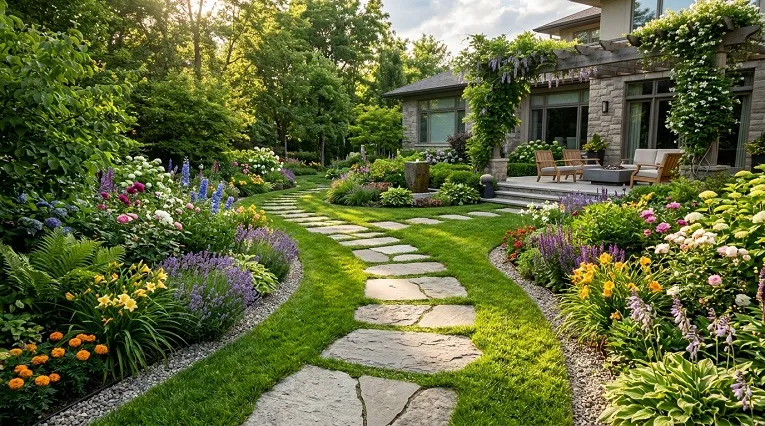
Garden stepping stones placed directly within the lawn create a natural flow while maintaining the beauty of the grass. Proper installation allows lawn mowers to pass over the stones easily.
Curved Garden Paths
Curved stepping stone paths create visual interest and encourage exploration.
A winding pathway can:
- Make a garden feel larger
- Reveal focal points gradually
- Add a sense of discovery
Landscape designers frequently use curved paths to create depth within smaller yards.
Step Stone with Ground Cover Plants
Plants growing between stones soften the path’s appearance and create a mature, established look.
Popular choices include:
- Creeping thyme
- Moss
- Sedum
- Corsican mint
These plants add texture and color while reducing maintenance requirements.
Japanese Inspired Garden Paths
Japanese gardens often feature carefully placed stepping stones designed to slow movement and encourage mindfulness.
Characteristics include:
- Natural stone shapes
- Asymmetrical layouts
- Moss accents
- Water features
This style creates a tranquil and elegant atmosphere.
How to Install Stepping Stones
Proper installation ensures stability, safety, and longevity.
Step 1: Plan Your Path
Determine:
- Starting point
- Destination
- Shape of the path
- Traffic patterns
Use a garden hose or rope to visualize the layout before installation.
Step 2: Test the Spacing
Correct spacing is essential for comfortable walking.
Most experts recommend spacing stones approximately 18 to 24 inches apart, depending on the average stride length.
Step 3: Mark Stone Locations
Place each stepping stone in position and test the walking experience before excavation begins.
Step 4: Prepare the Base
A stable foundation improves durability.
Common base materials include:
- Crushed gravel
- Sand
- Stone dust
The appropriate base depends on soil conditions and intended usage.
Step 5: Install and Level the Stones
Ensure each stone sits securely and remains level with the surrounding surface.
Uneven stones can create tripping hazards and reduce the lifespan of the pathway.
Step 6: Fill the Gaps
Gap fillers may include:
- Gravel
- Sand
- Decorative stone
- Ground cover plants
- Moss
The choice depends on your preferred aesthetic and maintenance goals.
Best Locations for Stepping Stones
Stepping stones work well in various landscape settings.
Ideal locations include:
Front Gardens
Create a welcoming entrance while protecting lawn areas from frequent foot traffic.
Backyard Retreats
Guide visitors toward:
- Seating areas
- Fire pits
- Gazebos
- Garden structures
Vegetable Gardens
Stepping stones provide convenient access without compacting soil around plants.
Water Features
Decorative stepping stones can cross shallow ponds, streams, and garden water features while adding visual interest.
Maintenance Tips for Stepping Stones
Maintaining your stepping stones helps preserve their beauty and safety.
Regular Cleaning
Remove:
- Leaves
- Dirt
- Debris
- Weeds
Routine cleaning prevents staining and improves appearance.
Prevent Algae Growth
Shaded and damp areas can encourage algae growth.
Reduce moisture retention by:
- Improving drainage
- Increasing sunlight exposure
- Trimming nearby plants
Sealants may also help protect stone surfaces.
Inspect for Movement
Check periodically for:
- Shifting stones
- Uneven surfaces
- Loose materials
Prompt adjustments help prevent larger issues.
Common Mistakes to Avoid
Poor Spacing
Incorrect spacing can make walking uncomfortable and awkward.
Always test the path before final installation.
Ignoring Drainage
Water accumulation can cause movement, erosion, and algae growth.
Ensure proper drainage throughout the pathway.
Choosing the Wrong Material
Not all materials perform equally well in every climate.
Consider:
- Rainfall
- Freeze-thaw cycles
- Foot traffic
- Maintenance preferences
Skipping Base Preparation
A poorly prepared base often leads to uneven surfaces and reduced longevity.
Budgeting for a Stepping Stone Project
Project costs vary depending on:
- Material selection
- Path length
- Site preparation
- Labor requirements
Concrete stepping stones generally offer the lowest upfront costs, while premium natural stone options provide greater durability and visual appeal.
DIY installation can significantly reduce overall expenses while still delivering professional-looking results.
Why Stepping Stones Remain a Landscaping Favorite
Stepping stones continue to be one of the most popular landscape features because they successfully combine beauty and practicality.
Benefits include:
- Improved accessibility
- Enhanced curb appeal
- Lawn protection
- Flexible design options
- Affordable installation
- Long-lasting performance
Whether you choose natural stone, concrete, or decorative garden stepping stones, the result is a pathway that improves both the appearance and functionality of your outdoor space.
Conclusion
Stepping stones are a simple yet highly effective way to elevate any garden or landscape design. They provide structure, protect your lawn, improve accessibility, and create visual interest throughout your outdoor environment.
With careful planning, proper installation, and regular maintenance, stepping stones can serve as a beautiful and durable feature for many years. Whether you are creating a winding garden path, enhancing your backyard retreat, or designing a modern landscape, stepping stones offer endless possibilities for creativity and functionality.
By selecting the right materials, spacing, and design approach, you can create a pathway that perfectly complements your garden while adding lasting value to your property.