Sliding doors are a popular feature in modern homes thanks to their sleek appearance, natural light, and easy access to outdoor spaces. However, while they score high on style and convenience, they can sometimes fall short in one critical area, security. That’s where a sliding door lock becomes essential. Whether you’re securing a patio door, balcony entrance, or interior sliding door, the right lock can significantly improve your home’s safety and peace of mind.
For general homeowners, sliding door locks are an affordable and effective upgrade that doesn’t require major renovations. From simple clamp-style locks to advanced keyed and smart locking systems, there are options to suit every budget, door type, and security need. Many also help prevent drafts, reduce noise, and improve overall door stability.
In this guide, we’ll explore what sliding door locks are, the different types available, their benefits, safety considerations, and how to choose the best option for your home. You’ll also find practical tips, visual concepts, FAQs, and a clear summary to help you make an informed decision.
What Is a Sliding Door Lock?
A sliding door lock is a security device designed specifically to prevent sliding doors from being opened without authorization. Unlike traditional hinged doors, sliding doors move horizontally, which requires specialized locking mechanisms.
Why Standard Sliding Door Locks Aren’t Always Enough
Many sliding doors come with basic factory-installed latches. While these may keep the door closed, they often lack the strength needed to deter forced entry. Over time, wear and misalignment can further weaken these locks.
How Sliding Door Locks Improve Security
Additional sliding door locks reinforce the door by:
- Preventing the door from sliding open
- Securing the door frame more firmly
- Adding secondary locking points
These enhancements make it much harder for intruders to bypass the door.
Types of Sliding Door Locks
Understanding the different types of sliding door locks will help you choose the right level of security and convenience.
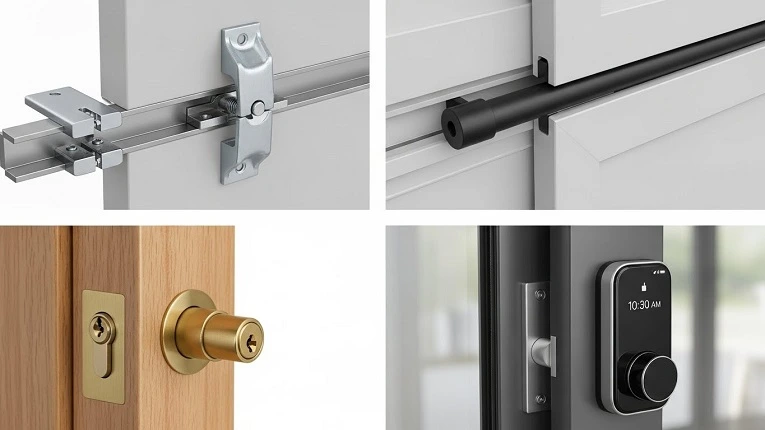
Clamp or Track Locks
Clamp-style locks attach directly to the door track, preventing movement.
Pros:
- Easy to install
- No drilling required
- Affordable
Cons:
- Visible from inside
- Can be removed if not tightened properly
Best for: Renters and quick security upgrades.
Bar or Rod Locks
Bar locks use a metal or wooden rod placed in the track to block the door from sliding open.
Pros:
- Extremely simple
- Very cost-effective
- No permanent installation
Cons:
- Must be removed manually to open the door
- Not ideal for daily high-traffic use
Best for: Nighttime security or vacation homes.
Keyed Sliding Door Locks
Keyed locks replace or supplement existing latches and require a key to unlock.
Pros:
- Strong physical security
- Familiar locking method
- Good deterrent
Cons:
- Requires installation
- Keys can be lost
Best for: Exterior sliding doors and patio entrances.
Double-Bolt Sliding Door Locks
These locks secure the door at two points, usually top and bottom.
Pros:
- Increased resistance to forced entry
- Better door alignment
Cons:
- More complex installation
- Higher cost
Best for: Homeowners prioritizing maximum security.
Smart Sliding Door Locks
Smart locks integrate with home automation systems and can be controlled via smartphone or keypad.
Pros:
- Keyless entry
- Activity monitoring
- Remote access
Cons:
- Higher price
- Requires power or batteries
Best for: Smart homes and tech-savvy homeowners.
Benefits of Installing a Sliding Door Lock
Enhanced Home Security
A high-quality sliding door lock makes forced entry significantly more difficult, protecting your family and belongings.
Peace of Mind
Knowing your sliding doors are securely locked allows you to relax, especially at night or when away from home.
Child and Pet Safety
Sliding door locks help prevent children or pets from opening doors and accessing unsafe outdoor areas.
Improved Door Stability
Many locks reduce door rattling, drafts, and movement caused by wind or improper alignment.
Safety Considerations
Emergency Egress
Ensure the lock allows quick exit from inside in case of an emergency, especially for bedrooms or main exits.
Proper Installation
Incorrect installation can weaken the lock or damage the door frame. Follow manufacturer instructions carefully.
Compatibility with Door Type
Sliding doors may be glass, aluminum, vinyl, or wood; always choose a lock designed for your specific door material.
How to Choose the Right Sliding Door Lock
When selecting a sliding door lock, consider:
- Door location: Interior vs exterior
- Security level needed: Basic deterrent or high-security
- Ease of use: Daily convenience vs occasional use
- Installation method: Drill-free or permanent
- Aesthetic preference: Visible or discreet design
Measuring your door thickness and track depth ensures a proper fit and optimal performance.
Conclusion
A sliding door lock is one of the simplest yet most effective upgrades you can make to your home’s security. While sliding doors add beauty and convenience, they require specialized protection to ensure they don’t become a weak point. With options ranging from basic track locks to advanced smart systems, there’s a solution for every homeowner and budget.
By choosing the right sliding door lock, you’re not just preventing unauthorized entry; you’re creating a safer, more comfortable living environment. Whether you want a temporary solution or a long-term security investment, adding a reliable sliding door lock is a smart and practical decision that pays off every day.
Frequently Asked Questions
Are sliding door locks secure enough for exterior doors?
Yes, especially when paired with additional security measures like bars or double-bolt systems.
Can I install a sliding door lock myself?
Many sliding door locks are DIY-friendly and require minimal tools.
Do sliding door locks damage the door?
Clamp and bar locks are non-invasive, while permanent locks require drilling.
Are sliding door locks safe for children?
Yes, many models are specifically designed as child safety locks.
Can smart locks be used on sliding doors?
Yes, many smart lock systems are compatible with sliding glass doors.